The Rhythmic Pulse of Life

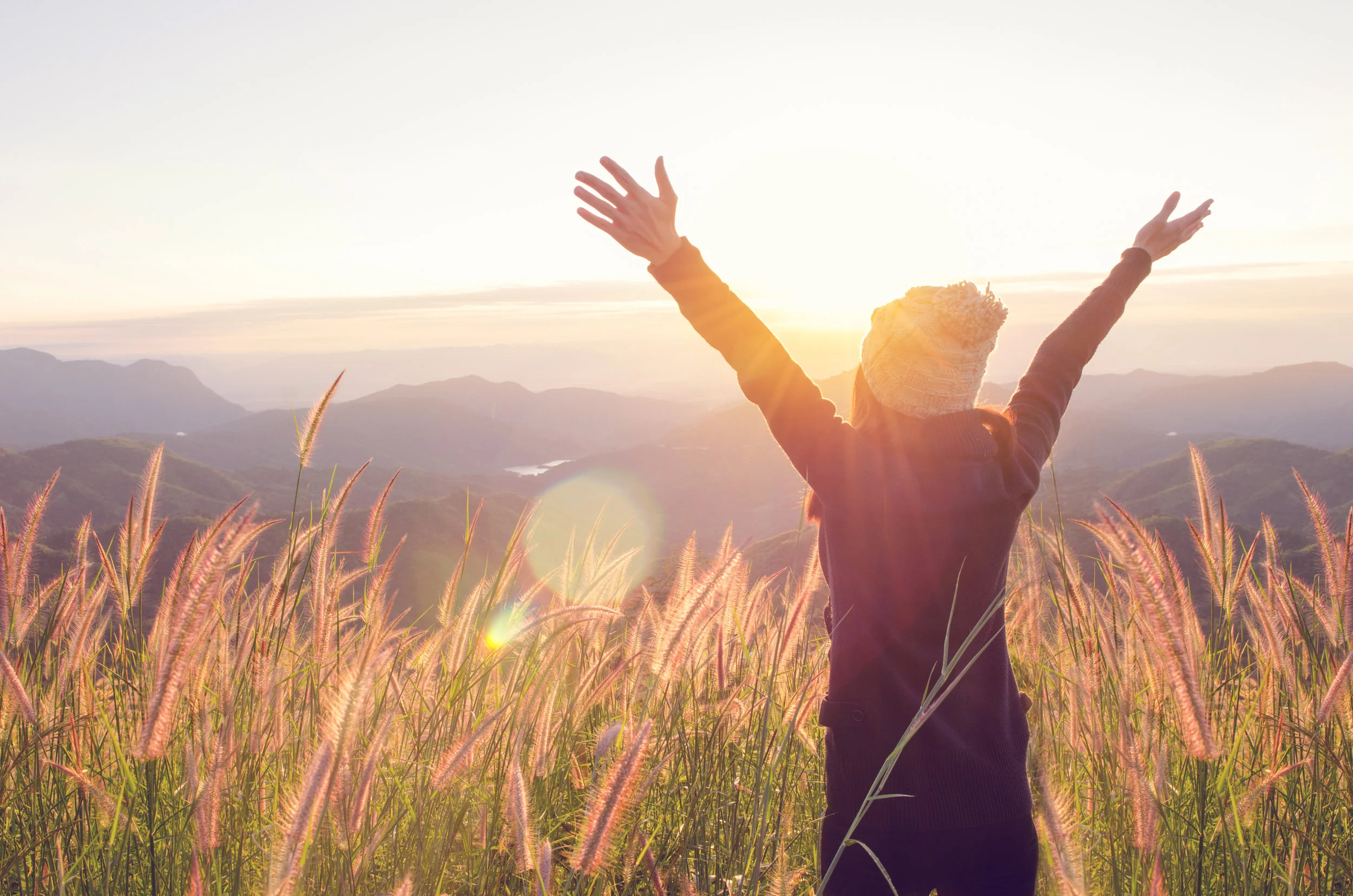
hands in sky.jpg

One of my favorite aspects of Traditional Chinese Medicine (TCM) is the emphasis on attuning the body and emotions to the energetics of each new season. Within TCM, the Five Rhythms or Elements reflect a rhythmic pulse of all life that influence human events and cycles. This energy flows through the entire body and leaves its imprint on every energy system. The law of Yin and Yang weaves through each rhythm, becoming the natural order of the universe, becoming the foundation of all things, Mother of change and the root of life and death:


Yang is the energy, the vital force, the potential. 

Yin is the substance, the foundation, the mother who gives rise to all potential.


Metaphors for describing these five distinct patterns were originally drawn from elements of nature (water, wood, fire, earth and metal) and from the seasons (winter, spring, summer, late summer and autumn).  Each meridian vibrates according to one of these Five Rhythms or Elements—i.e. Bladder + Kidney = Water. 

Although we have all five rhythms within us, a primary and secondary rhythm most heavily influences individual health and experience of this lifetime. For example, when in balance, the Water Rhythm easily flows through life, he is the philosopher and is a wellspring for new ideas. When out of balance, the Wood Rhythm becomes commanding and experiences emotional and/or physical symptoms such as anger, rage, jealousy, gallstones, knee pain, tendonitis. 

Like the background music during a movie, a person’s primary rhythm, in combination with the changing rhythms of life’s seasons, directs the tone and mood of the entire energy system and sets the atmosphere of the life being lived. The Five Rhythms Model provide a lens for understanding and working with chronic health issues, behavioral patterns and emotional challenges.


The five-rhythm cycle is best understood in the macrocosmic view of the elements


Screen Shot 2019-11-08 at 3.52.08 PM.png

Earth represents Late Summer and stabilizing, grounding, nourishing energy: The ripe apple

Metal represents Late Fall and contracting energy: Trees falling their leaves to conserve

Water represents Winter and descending energy: Rain falling or water seeking low ground

Wood represents Springtime and uprising energy: Plants bursting through the soil

Fire represents Summer and ascending energy: Flames reaching to the heavens


Would you like to flow through the seasons with more grace?

Do you want to build resilience in mind, body and spirit A N D have fun doing it!?

The 5 Rhythm Model provides a lens for understanding and working with chronic health issues, behavioral patterns and emotional challenges. This autumn, I will begin teaching workshops at both Yoga Sanctuary and Gilda’s Club TC, to explore and tap into the healing energy of each season. Through the past five years of study and personal practice, I have experienced again and again - when we explore and directly apply the resonance, characteristics and primary concerns of the rhythm during its own season, the impact permeates deeply into the body, mind and spirit to re-pattern actions, emotions and health imbalances.

The rhythms have so much to teach us!

Join me during these potent times of the year, to become more whole and live in greater resonance with the natural order of the nature, heaven and earth.

In the universe, the pure Yang Qi ascends to converge and form heaven; while the turbid Yin Qi descends and condenses to form earth. This movement helps create the rhythm of the seasons, enabling earthly beings to manifest. Birth in spring, growth in summer, consolidation in autumn and storage in winter.  By possessing this knowledge, you can coordinate your activities around these cycles and benefit from them, as all human life is interconnected with its environment, heaven and earth.
— The Yellow Emperor’s Classic of Medicine

The Encoded Energy of Spring

Each season has a unique vibrational frequency – energy encoded information that moves in waves, circulating in and around all that is.

Spring energy has a vigorous, exuberant frequency and is represented by the Wood Element. In nature, we can easily recognize the forceful manifestation of new growth – a tree bud bursting free of its husk, a dandelion splitting the sidewalk in search of the sun. Energetically, the Wood Element grants us the power of birth — new beginnings, growth, breaking through boundaries and surging forward.

Within the body’s meridian system, Liver and Gallbladder are the Wood Officials. The Liver Official is considered the grand architect, who creates the vision and sets the plan. Liver’s partner, the Gallbladder Official, organizes, coordinates and provides wise judgment for carrying the plan forward and ultimately, achieving the vision. From the most miniscule adjustments and decisions (even unconscious) to our highest conscious aspirations, the Gallbladder Official is always active.

From the mental perspective, we are also continually assessing and planning – for the next hour, day, year and perhaps, lifetime. When the Wood Officials are balanced, we easily organize our lives to achieve goals, give birth to, plan and achieve new objectives and ultimately, live out our vision. The power of reason and logic are contingent on healthy Wood energy, as the Liver and Gallbladder enable us to "see" with the minds-eye ("I see what you mean"). Similarly, the Wood Officials provide the contingency plan – the ability to “see” from other points of view, to adapt according to shifting circumstances. Thus, we can deal with obstacles without losing sight of our goal (vision).

Without such flexibility, we can become close-minded, prejudiced, frustrated or outright angry. What was once "my" plan becomes "the" plan, to which everyone must abide.

From the opposing extreme, an elemental Wood imbalance can manifest as an inability to self-assert, where we cave to others’ opinions or too readily surrender our vision.

Physically, even the simple act of standing is the direct result of continuous adjustments – decisions about when and where to shift weight and which muscles to contract or relax to achieve and maintain balance. Likewise, constant decisions are happening within the deepest levels of the physical body. From digestion to respiration and circulation, intercellular exchange and all other microfunctions, all tasks are being carried out (Gallbladder) according to the master plan (Liver). And just as imbalances can materialize on the mental level, they also manifest physically – resulting in malabsorption, poor detoxification and toxic build-up (think brain-fog, fatigue, gas and bloating, weight gain, hormonal imbalances and skin rashes and blemishes).


The Way of the Universe

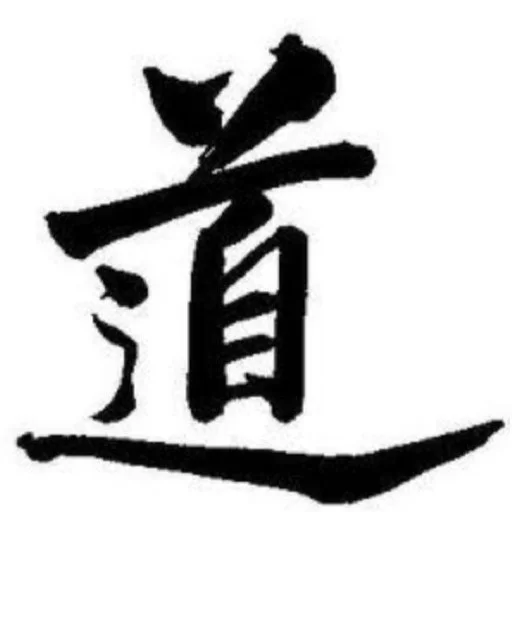
The Chinese symbol for Tao translates into "path", ”method”, “principle” and "way".

When we recall the Five Element Theory emerged from Taoism, it can be helpful to review the basic premises.

Classical Taoist (Daoist) philosophy is believed to have been devised during the 5th-4th centuries BCE. Classical (philosophical) Taoism grew out of observations of the natural world and ancient shamanic practices. It was distinguished from religious Taoism – with philosophical Taoism emphasizing living life in accordance with the Tao. For the order and harmony of nature, Taoist philosophers alleged, were far more stable and enduring than the power of state or institutions constructed by humans.

The philosophy of Tao signifies the fundamental or true nature of the world —

  • Tao both precedes and encompasses all of existence and is an essential, unnamable process of the universe

  • Analogies occur between all of existence. The universe, cosmos, earth and humankind are analogically aligned – they are equal in detail and are equal parts of an interconnected whole

  • The flow of ‘chi’ (qi) energy, is the essential energy of all living things, actions and existence, and is believed to be the influence that keeps the universal order of Tao balanced

  • Nothing is fixed, static or unmoving, as everything is constantly transforming

When we return to the Tao, we return to the interconnected whole and unity within ourselves, and within the natural world.


Acupressure + Qi Practice

Touch activates the path and intent directs the energy flow. 

As we move more deeply into Spring, we are encompassed in a surge of naturally occurring Wood energy. Given the vibrational transit is from yin to yang energy, the Spring transition is often more palpable than yang to yang or yin to yin transits — and we can leverage acupressure and Qi Gong practices to align with the incoming seasonal frequency. In doing so, we support a more easeful adjustment within the full complex of body-mind-spirit.

The Centre of Wellness

Elemental Wood Source Points

Meridians, and their acupressure points, have two basic functions: —circulate and distribute energy to organs, glands, the brain, limbs, bones and tissues of the body, and —send warning signals to the brain when an organ is compromised or an area of the body (over which a meridian passes) is injured.

Acupressure points uniquely support their ‘parent’ meridian and consequently, the associated organ. Meridians have a variety of points, including a single Source Point. Each Source Point is a special acupoint that is indicated when a specific meridian or organ appears under-energized, sluggish or stressed, or when we are striving to establish and hold homeostasis or balance (seasonal transitions). Source Points help us reconnect with our Original Qi, the deep reservoir of energy we are born with. Source Points are simple to work with, as they bring just the right amount of energy from deep within the Elemental Official (in this case, Liver and Gallbladder) to strengthen, harmonize and balance the associated meridian and organ.


Taoism does not identify human will as the root problem. Rather, it asserts that we must place our intention and action on living in harmony with the natural universe. By understanding the Tao, we may gain knowledge of the ourselves, and by understanding ourselves, we may gain knowledge of the Tao.

Given all things (including humankind) are microcosms of the Universe (analogies) — to which all natural laws such as the Five Element Theory, Feng Shui and Yin/Yang philosophy apply — when we support balance and transform blocked energy within our individual systems, we support balance and transformation within the collective, and vice versa.


Humans model themselves on earth,

Earth on heaven,

Heaven on the Way,

And the way on that which is naturally so.
— Laozi (Lao Tzu)

Vision Setting

Modern life is filled with opportunities to dream.

From childhood to adolescence, graduation onto adulthood, through careers, marriage, growing families, even into middle-age and empty nesting - what would our dream life look like at age 20, 30, 40, 50, 60, 70 and 80? In this dream, who would we surround ourselves with and what experiences would best support our journey?

Yet, within Western culture, dreaming is often discouraged, or even frowned upon. Instead, we are conditioned to attain. We navigate each stage or threshold as if it is a stepping stone, directing us toward the next achievement.

In contrast, cultures from around the globe and across time have held an antithetical view of dreams and thresholds. Ceremonies were held to honor rites of passage and support the transformation required to easily navigate from one life stage to the next — with vision, empowerment, a sense of community, and a deep connection to a higher power. Along with ceremony, many cultures participated (and continue to participate in) the vision quest — an age-old ritual for connecting with Spirit to find our deepest purpose. Such traditional practices transcend the stepping stone mentality, as they foster the creation of a detailed map to guide us toward where we want to grow, how we want to feel, who we want to become, and why we have these desires.

For those of us who have whizzed past multiple thresholds, with little more than a wayward glance, do not have access to ancestral practices, or simply have not realized life could be different when lived in alignment with a personal vision, it is never to late to re-calibrate the compass and set sail in a slightly different or completely new direction!


“You are never too old to dream a new dream.”

C.S. Lewis


A personal vision is our dream, our purpose for being. It is the reason we jump out of bed in the morning, ready to step into a new day. Our vision defines who we want to be, what we want to be known for and what set of experiences and accomplishments we aim to gain. A vision is the yin and yang of living life on purpose.

The yin and yang elements are both interdependent and complimentary of one another; one will jump-start the other. When we find the motivation to change (yang — goal oriented), we’re inspired to create a vision (yin — process-oriented). Or, when we dream a vision into being (yin — receptive), we have a reason to learn how to change (yang — determined).

Our vision becomes our “why”, the North Star guiding all major decisions and actions. After all, we would not steer north if we departed Seattle, intent on reaching Hawaii!

Which leads to the question…

  • How do you want to feel?

  • Who do you want to be surrounded by?

  • What do you believe you are capable of?

  • What could you contribute to the world, that aligns with how you want to feel?

  • When you die, how do you want to be remembered?

Asking any of these questions is the first step to defining your vision. These are the questions I return to when I’m facing a major decision or struggling with a daily goal or habit change (yes, this happens to me, too…). Why? Because a compelling vision provides clarity for the future, while directing us to place our attention in the present. It will assist in shedding all that holds us back, and most importantly, it will illuminate our way in periods of darkness and inspires us to focus on what truly matters.

Sheer life cannot be said to have a purpose because look at all the different purposes it has all over the place. But each incarnation, you might say, has a potentiality, and the mission of life is to live that potentiality.

How do you do it? My answer is, ‘Follow your bliss.’
— Joseph Campbell, The Power of Myth

Qi Gong

shutterstock_1224367900.jpg

Qi Gong is an ancient Chinese wellness practice integrating physical movement, breathing techniques and focused intention.

As I sit down to write this blog post, focused on a healing practice originating from Ancient China, the irony does not escape me. And yet, doesn’t the emergence of COVID-19 make self-care even more important? Thus I’ve decided to leave the politics to politicians, and focus on what I am passionate about — helping people find greater balance, feel less stressed and build vitality, from the inside out.


Practicing Qi Gong is so simple and so powerful. You cannot do it wrong. You can only do it good, better or best.
— Chunyi Lin

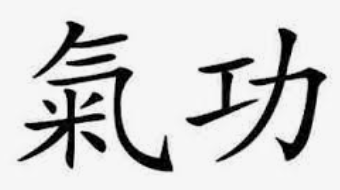
The term Qi Gong translates into “energy cultivation.” 

  • Qi, pronounced chee, is usually translated to mean the life force or vital energy that flows through all things in the universe (more about Qi). 

  • Gong, pronounced gung, means accomplishment or skill that is cultivated through steady practice with the intent of maintaining health and increasing vitality.

In terms of physiology, Qi is the electro-magnetic energy within the body that provides the power for movement and function on all levels ranging from cellular function to gross mechanical actions. Every living cell has an electrical charge on its membrane and within Qi Gong, our energy or Qi is activated through special movements and focused breathing.  

Screen Shot 2020-05-04 at 10.52.13 PM.png

Qi Gong practices can be classified as martial, medical or spiritual. All styles have three things in common: Posture, whether moving or stationary, breath and mental focus. Practice sequences vary, ranging from Qi circulation to cleansing and healing the body to Qi storage or emitting Qi to help heal others. At its core, Qi Gong falls is a multidimensional practice of slow gentle, rhythmic movements paired with specific breathing exercises and directed intention.

Within Traditional Chinese Medicine, Qi Gong is used first and foremost for prevention/health maintenance. Built upon the age-old legend that before modern medicine, Chinese physicians were only paid when the patient remained healthy – the Chinese fully embraced the idea that an ounce of prevention is worth a pound of cure. Can you imagine if our current “health care” system operated under such a powerful philosophy? 

From a treatment perspective, Qi Gong is recognized to reduce stress, build stamina, increase vitality and enhance the immune system. It has been clinically demonstration through medical research to improve heart failureblood glucose levels in type 2 diabeteschronic fatigue syndromepost-surgical paincancer survivorship and many other diagnoses. 

Like Yoga, Qi Gong promotes internal awareness and provides opportunity to directly interact with our energetic system, neither of which are included in traditional exercise programs. Specifically, most exercise programs focus on building physical strength and do not directly involve/activate the energetic system, i.e. meridians, extraordinary vessels, five-elements, or emphasize the importance of integrating breathing techniques and directed intention. When the physical, energetic and emotional dimensions are actively assimilated, the health benefits increase exponentially. 

As with any system of health care (including Western medicine), Qi Gong is not a panacea. That said, it is a highly effective practice and health care professionals are beginning to recommend Qi Gong as an important form of alternative/complementary medicine. Multiple medical centers and organizations across the US are helping to promote Qi Gong, including Society for Integrative Oncology and Memorial Sloan-Kettering.

Qi Gong has been a tremendous gift on my personal wellness journey and now, more than ever, I am putting this ancient practice to use. A practice that is truly accessible and adaptable to all, Qi Gong enriches lives regardless of age, ability or belief system.